
Safety
Wild animals
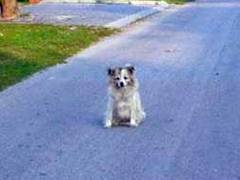 Contrary to a popular belief, polar bears do not walk the streets here (well, at least in summer, and with the exception of Zakopane). But there are a lot of dogs in Poland, and chasing cyclists passing by is a popular hobby among them. Dazers and similar hi-tech gadgets do not impress those beasts much. Don't panic, bark back!
Mosquito repellent may be handy when camping.
If you want something more exotic than dogs and mosquitoes, in southern Poland you can encounter Heracleum Sosnowskyi. It is not an animal, but a plant, looking like a giant dill. (up to 4,5 m high). It is not very common, but it can seriously burn you if you get too intimate with it. If this happens, cover the burned place from sun and wash it as soon as possible.
Roads
Poland is notorious for bumpy roads full of heavy trucks and speeding freaks. Leaving a bigger city in traffic might be a daunting task, especially in peak hours. There are few cycling facilities in cities in Poland (see below) and if you spot a cycleway sign, beware: often riding a loaded touring bicycle on such facility may pose serious threat. No kidding. On the other hand, in the countryside almost all marked cycle trails are just for avid mountain bike freaks on fat knobby tyres, not long-distance tourers.
As a rule of a thumb, avoid all national roads (numbers 1-99). Regional roads (numbers 100-999) may be very busy or very quiet, try to avoid at least those next to large cities.
Cycling facilities
Cycling on segregated facilities may be dangerous: be very cautious at junctions! If you see green light ahead, a car driving in the parallel lane to your left sees green, too - and may well want to turn right without braking, straight into you. Drivers tend not to care. In case of all junctions where cycle road crosses a subordinate street, the situation is very complicated: from the legal point of view, cyclists going staight ahead in the cycle road (along the road with priority) do not have priority over cars turning right (turning off the main road). Cyclists should in fact stop at every junction and yield to the traffic. In practice, some drivers do yield to cyclists and some do not. Look straight into driver's eyes and make sure he/she sees you before you go.
If there is no segregated facility, surface is bumpy and traffic is very heavy, many cyclists just ride on pavement. This is legal if speed limit in the street is above 50 km/h, and pavement is wider than 2 m, but you must yield to pedestrians. Cycling on zebra crossing is an offence - but nobody cares as long as it does not impede pedestrians, as this is often the quickest and most safe way for cyclists. Do not do it in front of a police car.
Drivers
Well, drivers are drivers. If you survived UK, Turkey etc. you'll probably do fine in Poland. Expect bizzarre overtaking manouvers, with three cars at a time suddenly driving side by side and passing each other just inches away. If you see speed limit sign, expect drivers to speed double the sign figure. Have fun.
Rural drivers in Poland seem to be less dangerous than their urban counterparts but perhaps it is just because they are more spread out than in urban areas. Drivers often sound their horns but there does not seem to be any discernable reaon for this most of the time. One sometimes encounters cars with no lights after dark.
Bike theft
Bicycles do get stolen in Poland. Use good quality U-lock and trust no one. Most of bikes in Poland get stolen from inside buildings, where people keep them day or night, but theft and even robbery happens in streets, too. The problem eases as you leave big cities, however stay alert and do not leave your bicycle unlocked and unaccompanied. Bikes left with good locks in the street sometimes get vandalised.
Police
Do not expect the police to understand (or speak) any foreign language. Reporting a bicycle theft (or any theft, mishap, crime etc.) may well take up to six hours. Or more. Your possible perfect knowledge of Polish or aid of an interpreter will NOT help. This is not a language problem. This is an organisation and civilisation problem.

